




Most blogging advice about how to make money blogging online sounds like this: build your audience first, focus on content, and monetisation comes later. And while there is some truth in the ‘build your audience’ part, the ‘monetisation comes later’ advice is holding a lot of bloggers back.
Here is what nobody tells you when you are starting out: the best time to set up your monetisation strategy is before you have traffic. Not because you will earn thousands in month one. But because building the right foundations early means that when the traffic does arrive, your blog is ready to convert it.
This post breaks down the four monetisation models that work for beginner bloggers, in the order you should approach them, so you are not scrambling to retrofit a business model onto a blog you have already built.

Why Most New Bloggers Delay Monetisation (And Why You Should Not)
The most common reason bloggers delay monetisation and make money blogging is a version of the same story: ‘I will start when I have more traffic to your blog. When my content is better. When my blog looks more professional.’
This thinking feels responsible. It is actually expensive.
Every month you blog without a monetisation strategy in place is a month you are building an audience with no clear path to earn from it. You are also missing the learning curve: understanding which content converts, which products resonate, and how your audience behaves. That learning makes monetisation and making money blogging easier the longer you have it running.
You do not need to be pushy. You do not need to turn every post into a sales pitch. You just need to build the infrastructure while you are building the content, so both are ready when the traffic arrives.
Related: How to Get Blog Traffic Without Google: The Pinterest-First Strategy for New Bloggers
The Four Blog Monetisation Models That Work to Make Money Blogging as a Beginner
There are dozens of ways to make money blogging. For beginners, four models consistently deliver results without requiring a large audience, a big budget, or technical complexity.
1. Affiliate Marketing
You recommend products or services you genuinely use, and earn a commission when someone buys through your link. No inventory. No customer service. No upfront cost. This is the fastest path to your first blog income and the one you can set up before you have significant traffic.
2. Digital Products
You create something once, such as a template, a guide, a mini course, or a printable, and sell it repeatedly. Digital products have the highest profit margin of any blog income stream. They also take the most upfront time to create, which is why most bloggers add them after they have identified what their audience most needs.
3. Display Advertising
You place ads on your blog and earn based on impressions or clicks. Most premium ad networks require a minimum monthly page view threshold, usually 10,000 to 50,000, depending on the network. Display ads are worth setting up eventually, but they are not the priority in your first month.
4. Email List Monetisation
Your email list is the highest-converting channel for every other monetisation model. Affiliate links perform better in email. Digital products launch better via email marketing. Everything compounds when you have a warm, engaged list. Building it from day one is the decision that pays off the longest.
Affiliate Marketing: The Fastest Path to Your First Blog Earnings
Affiliate marketing is where most new bloggers should start. Not because it is easy, but because it works at low traffic levels when other monetisation models do not.
The reason: affiliate income depends on reader intent, not reader volume. One highly targeted blog post with a well-placed affiliate link for a product your reader is already researching can earn more than a post with ten times the traffic and zero purchase intent.
How to start your affiliate strategy to help you st:
- List every tool, platform, product, or service you currently use in your niche.
- Check whether each has an affiliate program. Most do. Search ‘[brand name] affiliate program’ to find out.
- Apply to the programs for the products you genuinely recommend.
- Add affiliate links to your resources post (Day 5) and to any post where the product is a natural recommendation.
- Disclose affiliate relationships clearly. A simple line at the top of posts with affiliate links is all that is required.
Start with three to five programs maximum. Depth and relevance outperform volume every time. A focused, genuinely useful affiliate recommendation converts significantly better than a long list of loosely related products.
Digital Products: Why Bloggers Who Create Them Earn More Passively
Digital products are the monetisation model with the highest upside for bloggers, and the longest ramp. You will not create your best-selling digital product in your first month of blogging. But you can start preparing for it.
The most effective digital products are not invented out of thin air. They come directly from the questions your audience keeps asking, the gaps in the free content you have already published, and the frameworks you have developed through your own experience.
In your first month, your job is not to create a digital product. It is to pay attention. What do your readers respond to most? What questions show up in your comments, DMs, and email replies? What problem keeps coming up that your blog posts only partially solve? That gap is your future product.
Digital product formats that work well for new bloggers:
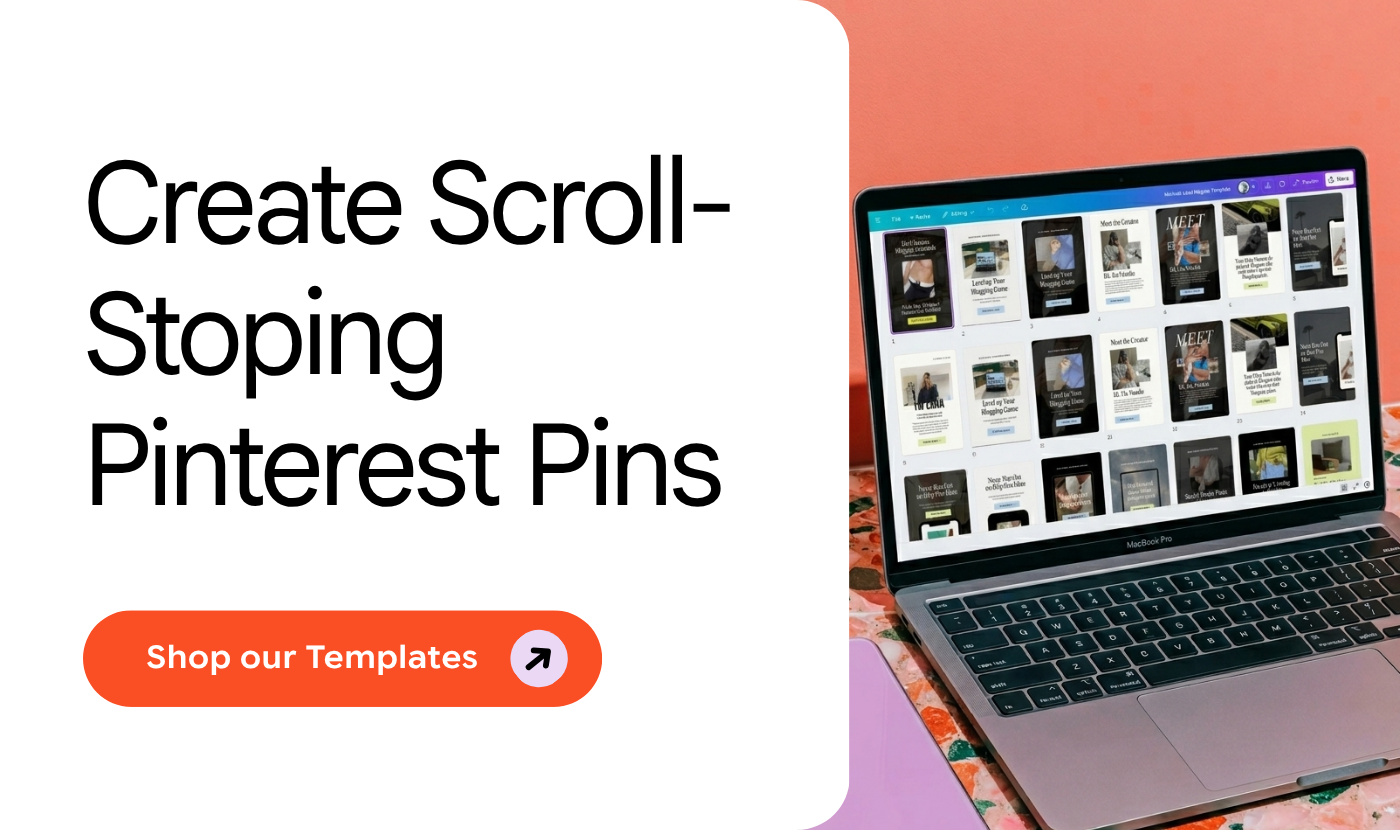
- Canva templates, such as Pinterest graphics, lead magnets, or social media templates
- Printable planning tools or worksheets
- Swipe files or done-for-you copy templates
- Mini guides or PDF workbooks under 20 pages
- Email sequences or content frameworks
Display Ads: When to Add Them and When to Wait
Display ads are the most passive income stream available to bloggers once you qualify. The challenge for new bloggers is the threshold: most reputable ad networks require a minimum of 10,000 to 50,000 monthly page views before they will accept your application.
Google AdSense has no minimum traffic requirement, but the earnings per thousand views are significantly lower than premium networks like Mediavine or Raptive. Placing low-earning ads on a new blog can also slow your site speed and create a poor reader experience, which matters both for SEO and for the trust you are building with your audience.
The recommendation for most new bloggers: skip display ads in your first three to six months. Focus on affiliate income and list building instead. Revisit ads once you are consistently above 10,000 monthly sessions.
Email List Monetisation: The Income Stream That Compounds Over Time
Every other monetisation model on this list works better when you have an email list. Affiliate content converts at a higher rate when your list already trusts you. Digital product launches generate more sales when they go out to a warm audience. Even display ad income is more stable when you are not entirely dependent on search algorithm shifts for traffic.
This is why building your email list from day one is not optional. It is the multiplier for every other strategy.
You do not need thousands of subscribers for email monetisation to work. A small, engaged, trusting list outperforms a large, disengaged one every single time. Fifty subscribers who open every email and click your links are worth more than five thousand subscribers who have not opened in six months.
What email monetisation looks like in practice:
- Sending a weekly or fortnightly email that naturally mentions the affiliate products you use
- Announcing digital product launches to your list before sharing them anywhere else
- Including affiliate recommendations in your welcome sequence
- Building trust through consistent, valuable content so that when you do make an offer, it converts
Profitable Blog Niches for Maximum Earnings
Not all blog niches are created equal when it comes to earning potential. Some niches have higher-paying affiliate programs, more demand for digital products, and audiences who are actively in spending mode. Choosing a profitable niche does not mean abandoning what you love. It means finding the intersection between what you know, what your audience needs, and what the market rewards.
Consistently profitable blog niches in 2026:
- Personal finance: budgeting, saving, investing, and debt payoff. High affiliate commissions and a massive audience actively looking for solutions.
- Online business and blogging: teaching others to build, monetise, and grow their own online platforms. Strong demand for courses, templates, and coaching.
- Health and wellness: weight management, mental health, nutrition. Evergreen demand with a wide range of products and affiliate opportunities.
- Food and recipes: one of the highest-traffic niches on Pinterest, with strong potential for display ads once traffic thresholds are met.
- Lifestyle and home: home organisation, decor, and slow living content attract a highly engaged audience with strong affiliate and brand deal potential.
- Education and parenting: homeschooling, child development, and learning resources have a highly motivated audience and strong digital product demand.
The most important rule: your niche should be specific enough that your reader feels like you are speaking directly to them. ‘Lifestyle blog’ is too broad. ‘Sustainable living for busy moms’ gives you a focused audience, a clear content angle, and a stronger monetisation foundation.
Related: How to Choose a Profitable Niche for Your Blog
Top Profitable Niches for Blogging Success
If you are still deciding on your blog niche, profitability is one factor worth weighing early. The most profitable blogging niches share a few characteristics: the audience has a problem they are actively trying to solve, they are willing to invest in solutions, and there is a clear path from your content to your income stream.
What separates a profitable niche from an unprofitable one:
- Affiliate programs with meaningful commissions exist for products in that niche.
- The audience searches with intent, meaning they are looking for specific answers, not just browsing.
- There is an obvious digital product or service your reader would pay for.
- The niche has long-term evergreen content potential, not just trending topics.
A quick way to test your niche: type your main topic into Google and Pinterest. If sponsored content, affiliate sites, and product recommendations already exist around it, that is a signal that the niche is monetizable. Competition in a niche means there is money there. Your job is to carve out a specific angle and serve your audience better than what already exists.
Strategies to Boost Blog Views and Traffic
Traffic is the engine behind every monetisation model. Without readers, even the best-structured affiliate strategy or most valuable digital product will not earn. The good news is that you do not need to be on every platform or publish daily to grow your blog traffic. You need to be strategic about where you show up and how your content gets found.
Proven traffic strategies for new bloggers:
- Pinterest SEO: Create keyword-optimised pins for every blog post. Pinterest drives evergreen traffic for months after you publish, making it the most efficient platform for new bloggers with limited time.
- On-page SEO: Use your target keyword in your title, first paragraph, at least one H2, and your meta description. Internal linking between your posts also improves how Google indexes your content.
- Email list building: Your email list is traffic you own. Every subscriber is a guaranteed reader for every email you send, with no algorithm between you and them.
- Guest posting: Writing for other blogs in your niche puts your content in front of an already-engaged audience and earns backlinks that improve your own search rankings.
- Content repurposing: Turn each blog post into Pinterest pins, an Instagram carousel, and a Threads post. One piece of content can reach four platforms without creating anything new from scratch.
The most important thing: consistency over volume. Two well-optimised blog posts per week, consistently published and promoted through Pinterest and email, will outperform ten rushed posts with no promotion strategy behind them.
Effective Ways to Promote Your Blog
Publishing a blog post is step one. Promoting it is step two, and step two is where most new bloggers underinvest their time. The general rule of content strategy is that you should spend as much time promoting a piece of content as you spend creating it. For new bloggers, that ratio should be even higher.
Blog promotion channels that compound over time:
- Pinterest: Create two to three pin variations for every blog post with keyword-rich titles and descriptions. Each pin is a long-term traffic asset that can drive readers to your blog for a year or more.
- Email newsletter: Send every blog post to your email list with a compelling hook that makes them want to click. Your list is your most reliable source of guaranteed traffic for every post you publish.
- Instagram carousels: Break your blog post’s key points into a saveable carousel. Each save signals to the algorithm that the content is worth sharing, extending your reach beyond your current followers.
- Threads and short-form social: Share one key insight from each blog post on Threads. Not the full post, just the most interesting angle. This drives curiosity and sends readers to the full piece.
- SEO and Google search: Optimising your posts for search means traffic that arrives on autopilot without any active promotion. It takes three to six months for most posts to rank, but the traffic compounds indefinitely once it starts.
- Collaborations and features: Being featured in another creator’s newsletter, podcast, or blog roundup puts you in front of their entire audience. One collaboration can deliver more traffic than a month of solo posting.
The bloggers who grow consistently are not the ones who are everywhere. They are the ones who have a clear promotion system for each post they publish. Pick two or three of these channels, do them well and consistently, and build from there.
Your 90-Day Monetisation Roadmap: What to Set Up and When
You do not need to do everything at once. Here is a realistic timeline for building your blog monetisation foundation without overwhelming yourself.
Month 1: Foundations
- Publish your first five blog posts, including a resources roundup with affiliate links.
- Join three to five affiliate programs relevant to your niche.
- Set up your email list with a free email service provider. Kit and MailerLite both have free tiers.
- Create one simple lead magnet, such as a checklist or swipe file, to start building your list.
- Write a three-email welcome sequence for new subscribers.
Month 2: Traffic and Visibility
- Set up a Pinterest business account and start creating pins for your blog posts.
- Publish two to four new blog posts with strategic affiliate link placement.
- Continue growing your email list and sending regular newsletters.
- Begin identifying the gap your future digital product will fill.
Month 3: Expand and Optimise
Revisit your welcome sequence and optimise based on open and click rates.
Analyse which posts are getting the most traffic and which affiliate links are converting.
Update top-performing posts with stronger affiliate link placement if needed.
Begin creating your first simple digital product based on audience feedback.
Ready to map your content strategy alongside your monetisation plan?
Grab the free Simplify Your Content Strategy in Just 4 Days email course. It walks you through building a strategy that grows your traffic and your income at the same time. Link below.